
Sigep World 2027 will occupy 138,000 square metres of Rimini’s exhibition centre, hosting five macro-sectors simultaneously: Gelato, Pastry & Chocolate, Coffee, Bakery and Pizza.
In an event of this scale, the real challenge in designing a stand at Sigep isn’t getting noticed — it’s being recognised immediately as part of your own sector. A visitor crossing several halls in just a few hours decides in seconds whether to stop, and that decision depends entirely on the stand’s visual language.
The sector map and its layout
The expansion of the fair’s east wing, with the new B8 and D8 halls, has enlarged the areas dedicated to pizza and bakery respectively, reinforcing Sigep World’s approach of organising space by distinct supply chains. This division isn’t purely logistical: it defines different visitor routes, different browsing habits and, above all, specific visual expectations for each sector. For this reason, every stand project should start from the sector’s position within the exhibition centre, well before any aesthetic decisions are made.
The visual codes audiences associate with each sector
Every Sigep World sector carries an established imagery, built over time through visitors’ direct experience. Recognising and using these codes lets visitors identify the sector before they even read the brand name.
Gelato tends to favour open volumes and direct contact with the public, as seen in the Elenka stand, built with white vertical slats and an integrated lounge area.
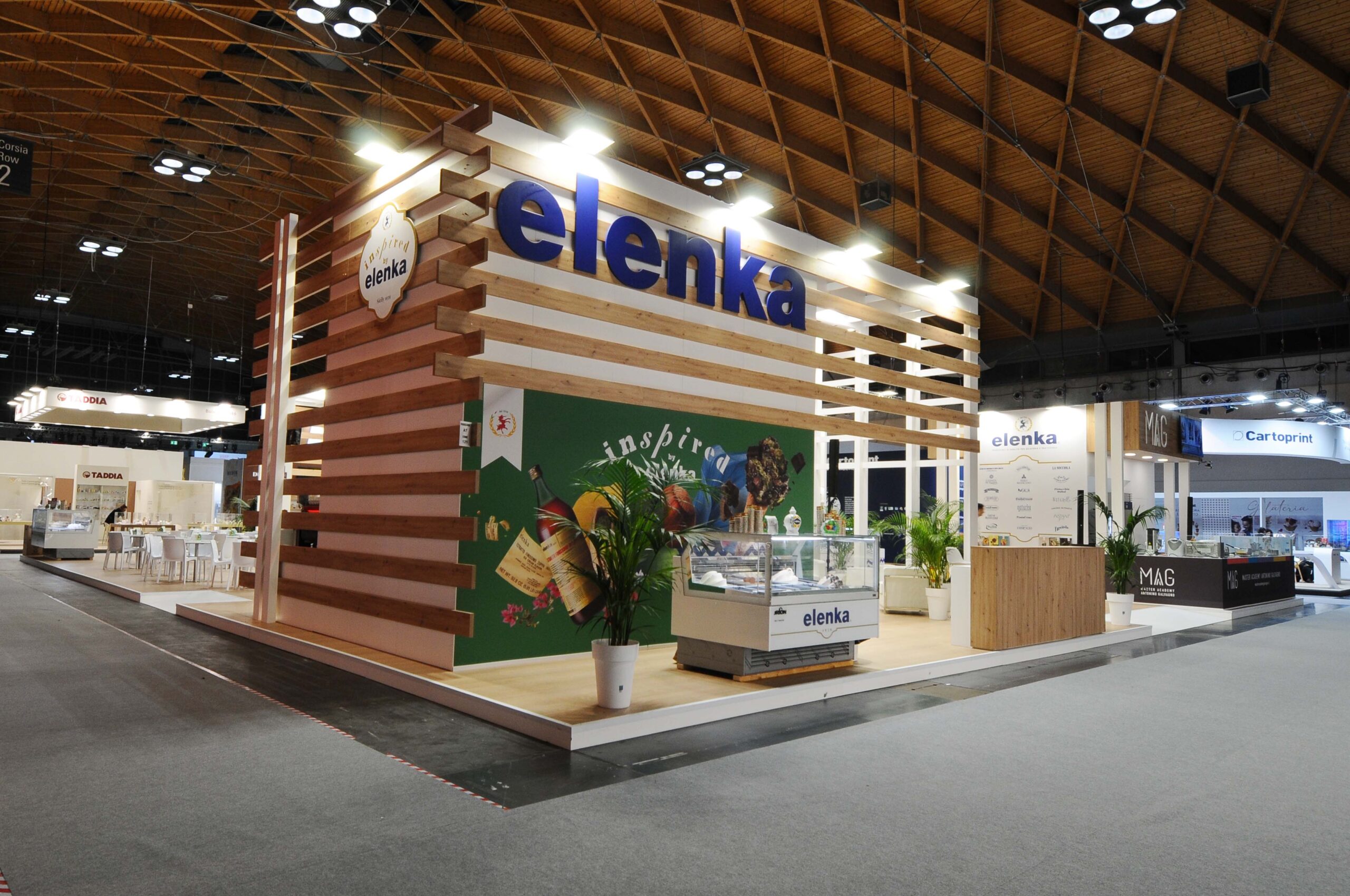
Elenka x Sigep di Rimini
The coffee world, for example, calls for warm materials, wood and focused lighting that enhances the tasting moment: this is the language Saci Project translated into the stand built for Nespresso.
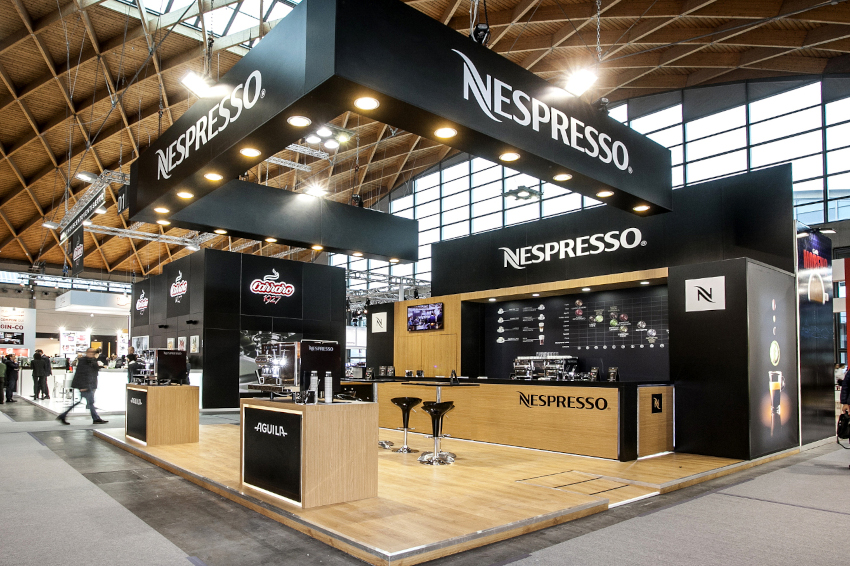
Nespresso x Sigep di Rimini
Bakery and pastry, by contrast, communicate through illuminated display cases and surfaces that put the product centre stage, as in the stand designed for FB Berton, where dark walls and Corten wood panels contrast with backlit shelving showcasing the baked goods on display.
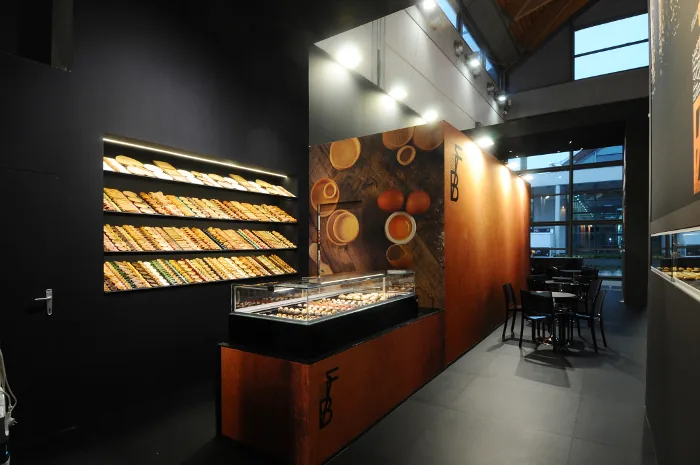
FB Berton x Sigep di Rimini
The risk of generic design
In a multi-sector venue like Sigep, a stand designed without a clear direction risks looking interchangeable, regardless of the quality of the products on display. Companies operating across multiple sectors — as often happens with raw material suppliers — face the greatest risk: without a clear visual hierarchy, the stand communicates genericness rather than specialisation.
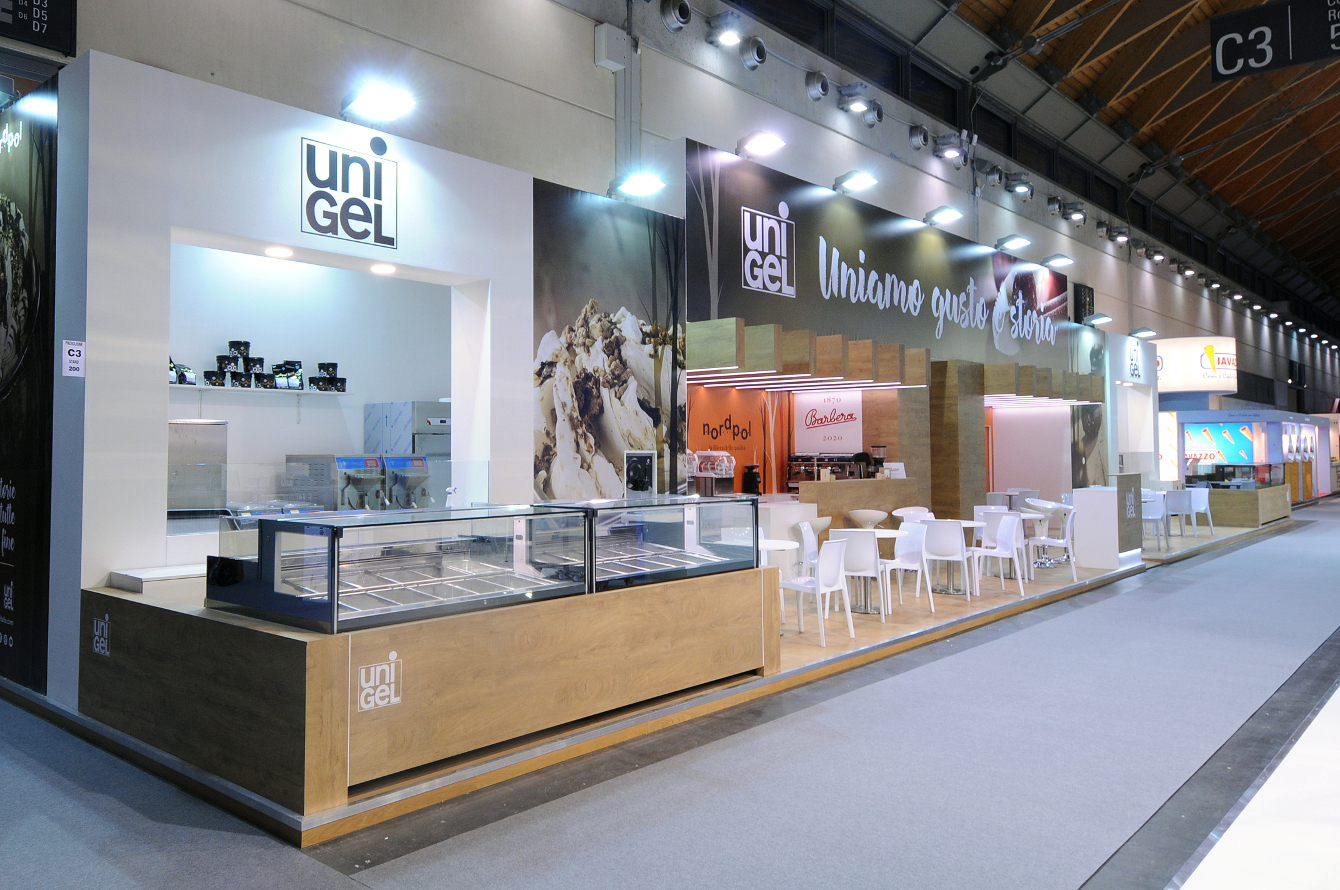
This is exactly the challenge Saci Project addressed in the Unigel project, where the stand hosts several sub-brands (Nordpol, Barbera) and multiple product lines within the same space. The solution was to create distinct zones through different materials and colour palettes, from the light wood of the gelato display cases to the warmer tones of the coffee corner, while maintaining a unified façade built around the payoff “Uniamo gusto e storia” (We unite taste and history) as the overall coherence element.